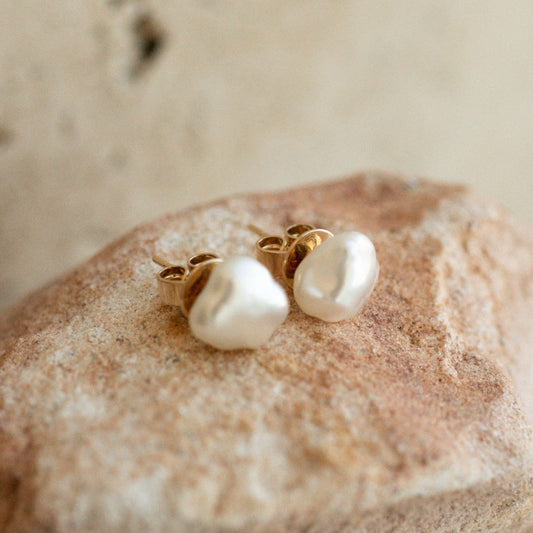
What Are Keshi Pearls?

What Are Keshi Pearls?
返回博客

Key Takeaways

  • Keshi pearls are formed without a nucleus during the pearl farming process and are composed entirely of nacre.  
  • Keshi pearls have exceptional lustre, are typically organic in shape and are rare.  
  • Our Keshi pearls are found at both our Cygnet Bay and Broken Bay pearl farms. 
  • To look after your Keshi pearl jewellery, avoid perfumes, sunscreens and lotions while wearing your jewellery. 
  • Pearls of Australia Keshi pearl jewellery only features Cygnet Bay Pearl Farm grown pearls, responsibly farmed, traceable and reflective of the commitment to sustainable marine practices. 

Summarise this article

Among the rarest and most enchanting pearl types, Keshi pearls are celebrated worldwide for their organic shapes, incredible lustre and unique nature. No two Keshi pearls are alike; each one tells its own story of the ocean, shaped entirely by Mother Nature herself. Their freeform silhouettes have long captivated both pearl lovers and jewellery collectors, offering a raw beauty that feels and is truly one-of-a-kind.

What does "Keshi" mean?

The word Keshi originates from Japanese, meaning “poppy seed”, a name that reflects their typically smaller size and seed-like form.

So, what does Keshi pearl mean? A Keshi pearl forms as a byproduct during the pearl cultivation process, when the pearl shell produces a pearl without a nucleus at its centre. This is often due to the nucleus being rejected by the pearl shell after seeding has taken place, or occurs simultaneously when a cultured pearl is being formed after seeding.

The result is a pure, solid piece of nacre.

What is nacre?

Nacre is an iridescent substance composed of calcium carbonate crystals, silk proteins and other organic materials. These are layered like brick work over the inner lining of the pearl shell, and it typically referred to as Mother of Pearl. The iridescence of the nacre is from the way that each successive layer of nacre is thickened based on the amount of visible light available. The layers of varying thickness causes light to reflect off the nacre from different depths, creating visible layers to appear as different shimmering colours.

How are Keshi pearls formed?

Keshi pearls typically form as a byproduct during the pearl farming process when a pearl shell rejects the seeded nucleus, but the mantle tissue remains within the shell, continuing to produce layers of nacre around this tissue or a smaller irritant.

Because there is no nucleus to guide the shape of the pearl, the Keshi pearl develops its own irregular form over the span of several years. Our Keshi pearls grown at Cygnet Bay on the Dampier Peninsula of Western Australia typically take between 5 to 7 years to form.

The spontaneous formation is what makes Keshi pearls so rare. Every Keshi pearl is a testament to the unpredictable nature of our oceans and the careful cultivation of our pearls.

Where are Keshi pearls from? 

As mentioned, Keshi pearls are a byproduct of pearl farming, so they can be found in any location where pearls are cultivated. This includes Indonesia, China, the Philippines, French Polynesia, Japan and Australia. The stunning Keshi pearls set in our Pearls of Australia jewellery pieces are grown at our very own Cygnet Bay Pearl Farm in Western Australia, but they can also be found at our sister pearl farm, Broken Bay Pearl Farm, in New South Wales.

  • Pearl long lines floating on a calm body of water at our Cygnet Bay Pearl Farm with a clear sky.

    Cygnet Bay Pearl Farm, WA

Are Keshi pearls real pearls?

Yes, Keshi pearls are 100% real pearls. What makes them special is that they form without a nucleus. Unlike imitation or synthetic pearls, and even cultured pearls, Keshi pearls are composed entirely of nacre.

Are Keshi Pearls Natural or Cultured?

Keshi pearls are considered cultured pearls but are the closest type of pearl to a natural pearl within a farm environment. They form within a seeded pearl shell, yet their formation is unplanned, and they do not have a nucleus, just like natural pearls.

What are natural pearls?

Natural pearls form when an irritant enters a pearl shell without any human intervention. Over time, the pearl shell coats the irritant with nacre, creating a pearl. Today, natural pearls are extremely rare to find and are often only seen on the antique market.

What are cultured pearls?

Cultured pearls are the result of human intervention, where a technician carefully inserts a nucleus into the pearl oyster with a piece of mantle tissue to stimulate the formation of nacre and this, all things going well, should result in a pearl.

This process, which occurs at both our Cygnet Bay and Broken Bay pearl farms, allows us to sustainably cultivate pearls without depleting wild pearl shell populations and doing this in harmony with our waterways.

Learn more about the difference in our Natural vs Cultured Pearls guide.

Natural vs Cultured vs Keshi Pearls

While Keshi pearls form within cultured pearl shell, their growth is uncontrolled. This makes them the closest representation of how pearls are formed in the wild. Although they are not “natural pearls”, their formation process mirrors that of natural pearls more closely than other types of pearls like our Akoya, South Sea and Mabe pearls.

What Makes Keshi Pearls Unique?

Keshi pearls are unlike other pearls. Although they resemble baroque shaped pearls, there are a few point of difference:

No nucleus: Keshi pearls are made entirely of nacre, giving them a depth of lustre that is unmatched.

Organic forms: Their shapes are often irregular.

Exceptional lustre: The absence of a nucleus allows light to reflect and refract across multiple layers of nacre.

Rare and unpredictable: There is no way to intentionally produce Keshi pearls in large quantities, making them incredibly rare and highly sought after.

How To Identify a Keshi Pearl

A true Keshi pearl can be recognised by its distinctive characteristics:

Shape: Freeform, baroque and irregular.

Surface: Smooth or rippled in surface texture.

Lustre: Deep and mirror-like lustre due to its solid nacre structure.

Nucleus: A true Keshi pearl will have no seed or nucleus at its core. This can only be seen via an X-Ray.

Discover how to choose the right pearl, whether Keshi, Mabe, South Sea or Akoya pearls for your collection in our Choosing Your Pearl guide.

What Shapes Do Keshi Pearls Come In?

Keshi Pearls can take almost any form, typically organic or irregular in shape. Their asymmetry gives our Keshi pearl jewellery designers creative freedom to craft pieces that are unique to the pearl itself - like our Keepsake Collection.

What Colours Do Keshi Pearls Come In?

Depending on the pearl shell species, Keshi pearls can display a stunning range of colours:

South Sea Keshi Pearls: white, silver or cream in colour.

Akoya Keshi Pearls: Silvery, white, bluish tones.

Tahitian Keshi Pearls: Peacock, grey or green-black tones.

Do Keshi Pearls Have More Lustre Than Other Pearls?

Keshi pearls typically do have more lustre than other pearls. As they are completely nacre, with no nucleus, Keshi pearls have a remarkably reflective quality. This inner radiance is one of the reasons jewellery lovers are drawn to these precious gems.

Are Keshi Pearls Valuable?

The value of Keshi pearls, like other pearls, is influenced by their size, shape, lustre, surface, colour, provenance and purity.

Because they cannot be intentionally farmed, Keshi pearls are naturally limited in supply, are one-of-a-kind and have amazing lustre, mainge them highly desired and valuable. Our Cygnet Bay grown Keshi Pearls are natural in colour and lustre, with no artificial enhancements and guaranteed origin.

Discover our Keshi Pearl Jewellery collection to explore these unique designs championing these unique Australian-grown pearls.

Ethical and Sustainable Sourcing of Keshi Pearls

Sustainability is at the heart of everything we do at Pearls of Australia. Our Keshi pearls occur within responsible pearl farming practices at both our Cygnet Bay and Broken Bay pearl farms.

At our Cygnet Bay Pearl Farm, located on the Kimberley coastline of WA, we ethically cultivate Australian South Sea pearls in harmony with our marine environment and surrounding communities. Each pearl is traceable from shell to showroom, ensuring every pearl jewellery piece aligns with our values of transparency and ethical sourcing.

How To Style Your Keshi Pearls

Keshi pearls lend themselves beautifully to both modern and timeless designs, making them extremely versatile. Their organic shapes pair perfectly with gold and diamond settings or layered alongside classic round pearls for contrast.

Whether set in a pearl ring, suspended on a fine chain, or crafted into statement earrings, Keshi pearls bring effortless elegance and individuality to any look.

Can I create a custom-made Keshi Pearl jewellery piece?

We offer the option to create your very own bespoke jewellery piece featuring a Keshi pearl set on a design from our collections with the Just For Me experience. Our team of expert jewellers can help you select the perfect Keshi pearl and set it into a handcrafted 9ct or 18ct gold designs, made to suit the pearl’s form and your preferences.

How should you care for and clean your Keshi Pearls?

To keep your Keshi pearl jewellery shining for generations we recommend the following:

- Avoid contact with perfumes, hairsprays, or lotions.
- Wipe gently with soft cloth after wearing.
- Avoid showering or swimming while wearing your Keshi pearl jewellery.
- Store separately in a soft pouch, removed from its jewellery box, to prevent scratching.

Have your pieces professionally checked and cleaned periodically by our team.

Read our comprehensive guide on how to care for your Keshi Pearl jewellery piece.

  • Woman on a beach with keshi pearl strand necklace and keshi pearl jewellery, sunset in the background
  • Person holding up a keshi pearl strand necklace while wearing a keshi pearl ring with a halo of diamonds surrounding the keshi pearl.
1 / 2

Pearls of Australia Keshi Pearl Jewellery Selection

Why Choose Pearls of Australia for your Keshi Pearl Jewellery?

Keshi pearls remind us that beauty often lies in imperfection and the spontaneity of nature. Each one is a small, lustrous sculpture formed by the rhythm of the ocean.

At Pearls of Australia we celebrate these natural treasures through ethically and sustainably grown pearls traced to our very own Cygnet Bay and Broken Bay pearl farms. When you choose a Keshi pearl from us, you’re choosing a rare and radiant reflection of nature’s unscripted treasures.

Explore our Keshi Pearl Jewellery Collection today and discover the natural beauty of these precious gems.

Woman wearing a keshi pearl strand necklace and keshi pearl earrings outdoors

Find the Perfect Keshi Pearl Jewellery for you!

Prefer to talk to one of our Jewellery and Pearl experts before purchasing one of our Australian Keshi pearl pieces? They would love to help you in any way, please contact them either by sending an email to hello@pearlsofaustralia.com.au or call (08) 6478 6886.

Contact Us

Keshi Pearls FAQs

What is a Keshi Pearl?

A Keshi pearl is a non-nucleated pearl formed as a byproduct of the pearl cultivation process. Unlike traditional cultured pearls, it develops without a bead nucelus, meaning it is composed entirely of nacre.

Are Keshi pearls real pearls?

Yes, Keshi pearls are 100% real pearls. They are formed inside an oyster, just like other pearls. The key difference is that they form accidentally during cultivation, rather than intentionally around a nucelus.

Why are Keshi pearls so lustrous?

Keshi pearls are made entirely of solid nacre, rather than a thin nacre coating over a bead. This allows light to travel through multiple layers, creating exceptional lustre and iridescence, often more intense than typical cultured pearls.

Are Keshi pearls considered natural or cultured?

Keshi pearls sit in a unique category. While they are non-nucleated like natural pearls, they form within a farmed environment as a byproduct of cultivation, so they are generally classified as cultured pearls.

Why are Keshi pearls irregular in shape?

Without a nucleus to guide their growth, keshi pearls form freely inside the pearl shell. This results in organic, baroque shapes, each one completely unique and impossible to replicate.

Are Keshi pearls rare?

Yes, especially South Sea Keshi pearls. Modern pearl farming techniques often prevent their formation, making high-quality keshi pearls increasingly scarce.

What types of pearl shell produce Keshi pearls?

Our Pinctada maxima and Pinctada fucata both produce Keshi pearls at our pearl farms. Currently, we only set our jewellery with our Australian South Sea Keshi Pearls.

How are Keshi pearls used in jewellery?

Due to their organic shapes and high lustre, Keshi pearls are often used in contemporary jewellery designs, perfect for pieces that celebrate individuality like our Keepsake collection and Kimberley Lily collection. Discover our range of Keshi pearl jewellery.

How to identify genuine Keshi pearl jewellery from fake?

Keshi pearls are prized for their organic beauty and exceptional lustre, but like all fine jewellery, this can be imitated. Knowing how to identify a genuine keshi pearl ensures you're investing in something real.

Authentic keshi pearls are never perfectly round. Their formation without a nucelus results in freeform shapes. They are different to baroque pearls as baroque pearls are cultured pearls with a seed or nucleus at its centre. Keshi pearls do not have a seed or nuceleus, and are composed of 100% nacre.

As mentioned, Keshi pearls are made entirely of nacre, which gives them a deep, mirror-like lustre that reflects light beautifully. Imintation pearls struggle to recreate that inner glow keshi pearls are famous for.

Real keshi pearls may have subtle ripples or natural imperfections. Perfectly smooth, glass-like surfaces can indicate synthetic pearls.

Genuine keshi pearls tend to feel heavier and cooler to the touch compared to plastic imitations.

Authentic keshi pearl jewellery should come with clear information about its origin. At Pearls of Australia, keshi pearls are traceable to our Cygnet Bay Pearl Farm, offering you confidence in authenticity and ethical sourcing of our pearls.

When in doubt, always purchase from a trusted jeweller who can verify the pearl's origin and quality. Discover our guide on how to tell the difference between real or fake pearls.

Are Keshi pearls expensive compared to other pearls?

Keshi pearls sit in a unique position within the pearl market, Saltwater keshi pearls are valued for their rarity, but priced differently to traditional round South Sea pearls.

Keshi pearls are the closest type of pearls to natural pearls, and cannot be consistently produced. This unpredictability makes them relatively rare and highly sought after.

Because they are composed entirely of nacre, keshi pearls often display stronger lustre than other cultured pearls, adding to their desirability.

Factors like size, colour, lustre and pearl type (freshwater versus saltwater), influence value. Individual keshi pearls can range from modest price points to high-end designer pieces depending on their characteristics and origin. Because of the rarity associated with keshi pearls at our pearl farms, we do not sell them loose.

In short, keshi pearls can be more valuable than other pearl types - particularly Saltwater keshi pearls.

Where can I buy authentic Keshi pearl earrings in Australia?

If you're searching for authentic keshi pearl earrings in Australia, it's important to choose a brand that prioritises provenance and craftsmanship. At Pearls of Australia, our keshi pearl earrings are designed using Saltwater pearls sourced directly from our Cygnet Bay Pearl Farm in WA, ensuring full traceabilitiy from ocean to finished piece.

Buying from a trusted Australian pearl producer ensures your jewellery is both genuine and responsibly sourced.

Where can I find unique Keshi pearl necklace designs?

Keshi pearl necklaces are known for their individuality, no two pearls are the same, making each design inherently unique.

Whether you're drawn to the minimalist designs of our Savanna Keshi Pearl Necklace or more expressive style like our Kimberley Lily Lariat, keshi pearl necklaces offer a modern interpretation on classic jewellery that's defined by nature, not perfection.