Pearls are the world’s oldest gemstones. They history of pearls spans thousands of years, beginning with early coastal discoveries and evolving into a global symbol of beauty and cultural meaning.
From dangerous diving to sustainable farming. The history of pearl diving reflects a shift from high-risk diving to modern, ethical cultivation.
Cultured pearls transformed the industry. Innovations by Kokichi Mikimoto revolutionised the market, marking a major milestone in cultured pearl history.
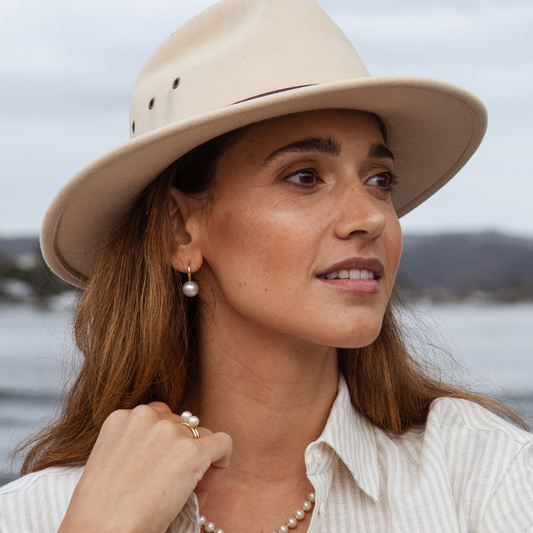
Pearls have shaped fashion across centuries. From ancient Rome to modern icons like Coco Chanel, the history of pearls in fashion highlights their enduring role as a staple of timeless style.
Australia plays a vital role in modern pearling. Regions like Broome and farms like our Cygnet Bay and Broken Bay pearl farm are central to producing some of the world’s finest and most sustainable Saltwater pearls.
The history of mother of pearl is deeply intertwined with the pearl industry itself. This iridescent inner shell lining has been used for tens of thousands of years, with evidence dating back to the Bardi Jawi people of the Dampier Peninsula. The pearl shell was both an important and nutritious food source and was of great cultural significance. They would carve the mother of pearl shell into a teardrop shape and then carve unique lines into the shell before staining it with red ochre.
On the other side of the world, mother of pearl shell became prominent over 6,000 years ago, with evidence dating back to Ancient Egypt. It later became prominent in Ottoman architecture, religious artefacts and decorative inlay work in decor and furniture.
By the 19th century, mother of pearl became a global commodity through button production. In Broome, vast oyster beds positioned the region as the world’s leading supplier. At one stage, Broome contributed to over 80% of global mother of pearl before World War II.
For centuries, the only way to source pearls was through dangerous pearl divers date back to around 2,000 BCE in China, with others operating across the Persian Gulf, India and Sri Lanka. These divers would descend up to 30 metres on a single breath, risking their lives in search of oysters that might contain a pearl.
This era defined the early history of pearls and directly influenced wealth and trade across multiple regions.
Comparing Historical Diving Methods with Modern Cultivation
Then:
Free diving with no equipment
High risk, low success rate
Natural pearls were and are extremely rare
Now:
Sustainable pearl farming of Saltwater pearls
Diving for pearl shell with suits and equipment
Safety procedures now in place
Today's methods reflect a refined evolution of the industry, where careful craftsmanship replaces chance.
1 / /2
How Has Pearl Farming Evolved Over Time?
The shift from natural harvesting to farming marks one of the most important turning points in cultured pearl history.
In the late 19th century, Kokichi Mikimoto revolutionised the industry by developing a reliable method for cultured pearls. By 1899 he successfully brought cultured Akoya pearls to market, forever changing accessibility and supply of Saltwater pearls.
Modern pearl farming has since evolved into a highly skilled practice that balances:
Marine science
Environmental stewardship
Generational knowledge
At Australian pearl farms like Cygnet Bay and Broken Bay, pearl cultivation is deeply connected to sustainability and the health of our oceans.
澳大利亚第一家珍珠养殖场于 1956 年在布鲁姆以北 370 公里的库里湾建立,当时澳大利亚南洋珍珠首次采用御木本技术进行养殖。仅仅 4 年后,第一家澳大利亚人拥有并经营的珍珠养殖场在布鲁姆建立,这就是我们自己的 Cygnet Bay Pearls。Cygnet Bay Pearl Farm是第一家成功商业化养殖澳大利亚南洋珍珠的非日本公司。
What Historical Periods Are Known For Their Prominent Pearl Use In Fashion?
The Pearl Age (15th to 17th Century)
This period marked the height of the history of pearls in fashion, particularly across European royalty. Pearls were set in crowns, necklaces, hairpieces, gowns, and more.
Victorian & Edwardian Eras
Pearls symbolised elegance and femininity, often warn in delicate strands and brooches.
20th Century Revival
Icons like Coco Chanel redefined pearls as everyday luxury, layered and effortlessly chic.
The Impact of Famous Historical Pearl Collections on Contemporary Designs
Royal and historic pearl collections have heavily influenced modern jewellery design. From elaborate royal pearl strands to heirloom pieces, these collections inspire:
Layered pearl styling
Mixed materials: Gold, pearls and diamonds in intricate designs
Statement yet organic forms
Today’s designers reinterpret these influences through a contemporary lens, balancing tradition with innovation.
The history of pearls dates back over 4,000 years, with early discoveries in regions like China and the Persian Gulf. Initially found by chance while gathering food, pearls quickly became symbols of wealth, power and spirituality across ancient civilisations.
How were pearls discovered?
Pearls were likely discovered accidentally by early coastal communities opening oysters for food. Inside, they found naturally formed gems, sparking fascination and leading to the development of pearl diving and trade.
What is the difference between natural and cultured pearls?
Natural pearls form without human intervention, while cultured pearls are created when a small seed called a nucleus is insertedinto a pearl shell. Both are real pearls, but cultured Saltwater pearls are far more common today due to sustainability and consistency.
What is the history of pearl diving?
The history of pearl diving dates back to at least 2000 BCE. Divers in regions like the Persian Gulf and Asia would free-dive to great depths without equipment, making it a dangerous profession.
How have pearl farming techniques evolved over time?
Pearl farming has evolved from manual, unpredictable harvesting to highly refined cultivation techniques. Today, saltwater pearl farms aim to use sustainable practices and longer growth cycles to produce high-quality pearls while supporting marine ecosystems.
Why are pearls still relevant today?
Pearls remain highly valued due to their natural beauty and cultural significance. Modern pearl farming ensures they are one of the few truly renewable luxury gemstones, making them increasingly relevant in today’s ethical jewellery landscape.