阿古屋珍珠与南海珍珠
想知道南海珍珠和阿古屋珍珠有什么区别吗?虽然两者都是海水珍珠,但它们是由两种不同种类的珍珠壳生产的,这些珍珠壳在不同环境中培育:我们的 Cygnet Bay 珍珠养殖场和我们的 Broken Bay 珍珠养殖场。请继续阅读以了解我们的两种海水珍珠之间的区别:
合浦珠母贝
澳洲阿古屋
布罗肯湾珍珠养殖场
白色、银色、金色、蓝色
圆形的
4 毫米 - 8 毫米
被誉为“御木本珍珠”
大珠母贝
澳大利亚南海
小天鹅湾珍珠养殖场
白色、银色、奶油色
圆形、巴洛克风格、纽扣
9 毫米 - 16 毫米
世界上最大的珍珠壳,珍珠母纽扣的主要来源。
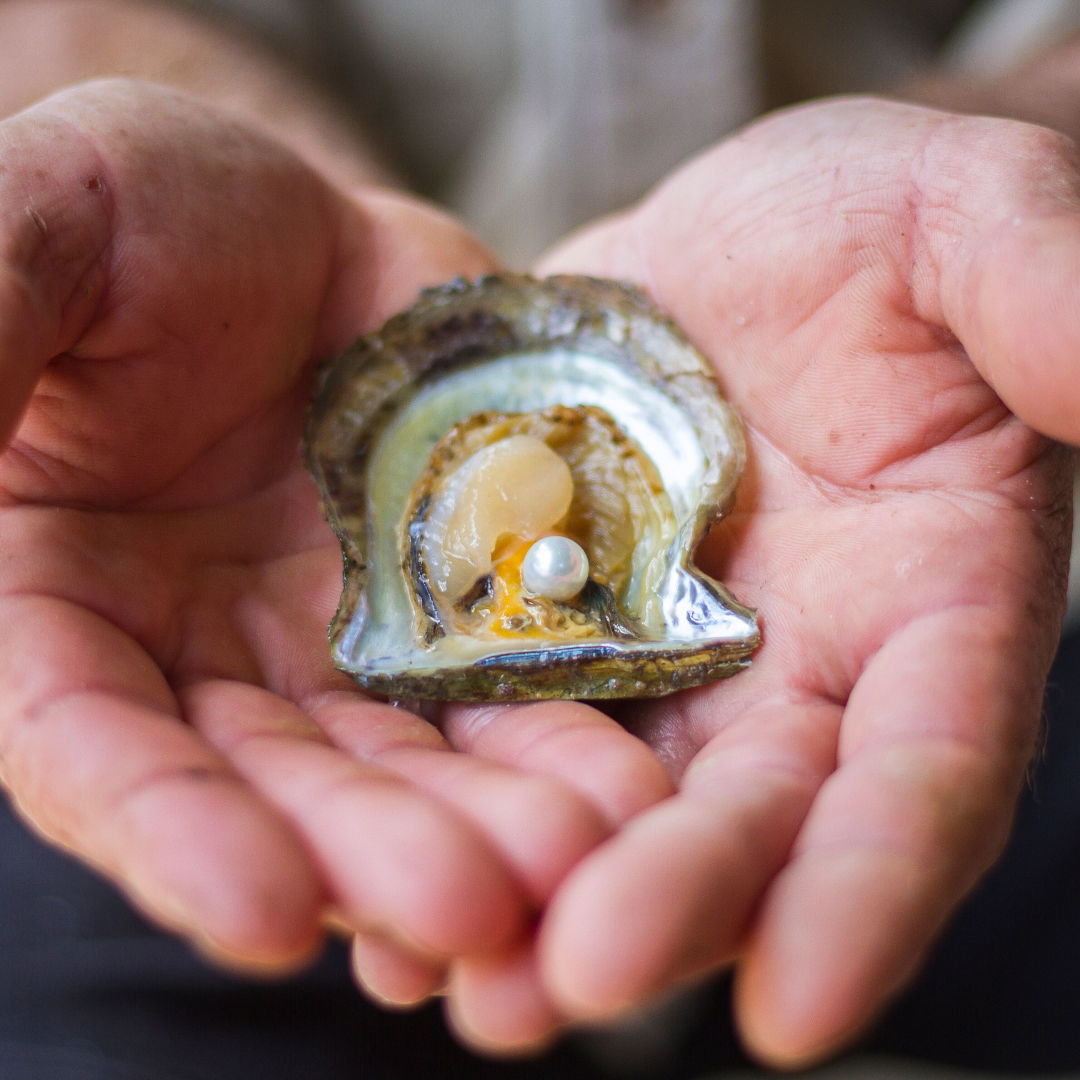
一颗 Akoya 珍珠 是一种来自合趾珠母贝的海水珍珠。这种珍珠贝主要分布在日本沿海较冷的水域,以及越南、韩国和澳大利亚。我们的 Akoya 珍珠是在新南威尔士州的Broken Bay 珍珠养殖场养殖的。由于 Akoya 贝比大合趾珠母贝小得多,实际上是所有产珠软体动物中最小的,这是 Akoya 珍珠通常比南海珍珠小的原因之一,大多数 Akoya 珍珠的长度在 2 到 8 毫米之间。Akoya 珍珠的颜色各不相同,所以虽然大多数人想到 Akoya 珍珠时都会想到白色珍珠,但还有许多其他颜色可供选择。这是因为 Akoya 珍珠的颜色取决于环境和牡蛎的饮食。Akoya 珍珠可以包括白色、乳白色、蓝色和粉红色等不同颜色。
阿古屋珍珠是海水珍珠。虽然淡水珍珠在单个养殖周期内平均可产出 20-50 颗珍珠,但阿古屋珍珠壳很少能产出超过两颗。它们在较冷的咸水水域中养殖,而淡水珍珠则在淡水水域中生长和收获。
您可以通过几种方法判断珍珠的真假。首先,您可以查看珍珠的表面。除非非常昂贵,否则真珍珠的表面更可能存在不规则性,而假珍珠的表面通常非常完美。这意味着假珍珠摸起来比真珍珠光滑得多,真珍珠具有粗糙的质地。您还可以使用牙齿测试来检查珍珠的粗糙程度。这需要用牙齿轻轻摩擦珍珠的正面。记住不要用牙齿摩擦珍珠的侧面,因为这可能会划伤珍珠。同样,您需要查看珍珠的粗糙质地,如果珍珠是假的,则不会有这种质地。
在Pinctada fucata贝壳中生长的黑色 Akoya 珍珠是染色的。我们的 Akoya 珍珠和海水珍珠均未经过任何化学处理或增强处理。我们直接从海洋中捕捞珍珠,以最纯净的形式将它们镶嵌在珠宝中,完全符合大自然的本意。在某些国家/地区,您可能会遇到经过化学处理或增强处理的 Akoya 珍珠,因此在做出购买决定之前,最好先询问一下珍珠的纯度和来源。如果您正在寻找黑珍珠,Pinctada margaritifera 或大溪地珍珠壳会产出黑珍珠,这些珍珠可以在法属波利尼西亚、库克群岛和密克罗尼西亚群岛找到。
大多数珍珠组织使用相同的品质或价值因素来描述和分类珍珠:形状、大小、颜色、表面和光泽。分级系统已经开发出来以适应特定的珍珠类型,通常结合光泽和表面来反映质量,因为形状、大小和颜色被认为是高度主观的。我们在澳大利亚珍珠使用的系统范围从 B2 到 A1,其中 B2 为最低质量,A1 为最高质量。另一种流行的珍珠分级方法是从 A 到 AAA 的等级,其中 A 为最低质量,AAA 为最高质量。分级珍珠时考虑的因素包括大小、形状、颜色、光泽、表面质量和珍珠层厚度,尽管最后一个因素通常只在评估最高质量的珍珠时才考虑,而评估过程通常涉及使用 x 射线技术或通过钻孔查看核和珍珠层涂层的交汇处。大多数珍珠组织使用相同的品质或价值因素来描述和分类珍珠:形状、大小、颜色、表面和光泽。分级系统已发展到可以满足特定珍珠类型的需要,通常结合光泽和表面来反映品质,因为形状、大小和颜色被认为是高度主观的。我们澳大利亚珍珠公司使用的分级系统范围从 B2 到 A1,其中 B2 为最低品质,A1 为最高品质。另一种流行的珍珠分级方法是从 A 到 AAA,其中 A 为最低品质,AAA 为最高品质。珍珠分级时考虑的因素包括大小、形状、颜色、光泽、表面品质和珍珠层厚度,尽管最后一个因素通常只在评估最高品质的珍珠时才考虑,而评估过程通常涉及使用 X 射线技术或通过钻孔查看核和珍珠层涂层的交接处。
南洋珍珠 是一种海水珍珠,被认为是所有珍珠中最稀有的一种。它们产自大珠母贝,其名称“南海”源于其产地,因为这种珍珠母贝分布在南半球,特别是澳大利亚北部、印度尼西亚、菲律宾、缅甸和法属波利尼西亚。我们的南海珍珠是在西澳大利亚金伯利海岸的Cygnet Bay 珍珠养殖场的原始偏远水域中可持续养殖的。
我们的南洋珍珠是人工养殖的。从蛤壳中取出一颗珠子,然后将一小块来自供体壳的外套膜组织小心地放入南洋珍珠壳内,即可形成南洋珍珠。这个过程称为“播种”,是由经验丰富的技术人员进行的外科手术。小圆珠成为珍珠的核,珍珠壳会用珍珠质包裹住珠子,珍珠质是珍珠壳分泌的一种保护自身的物质。随着时间的推移,这种珍珠质会逐渐形成珍珠。每颗南洋珍珠大约需要 2-3 年才能长成,并在我们的Cygnet Bay 珍珠养殖场进行养殖。
南海珍珠被认为是所有珍珠中最稀有的一种。它们产自大珠母贝,“南海”这个名字源于这种珍珠的产地,因为这种珍珠产于南半球——特别是在澳大利亚北部、印度尼西亚、菲律宾、缅甸和法属波利尼西亚。我们的南海珍珠是在西澳大利亚金伯利海岸的Cygnet Bay 珍珠养殖场的原始偏远水域可持续养殖的。
您可以通过几种方法判断珍珠的真假。首先,您可以查看珍珠的表面。除非非常昂贵,否则真珍珠的表面更可能存在不规则性,而假珍珠的表面通常非常完美。这意味着假珍珠摸起来比真珍珠光滑得多,真珍珠具有粗糙的质地。您还可以使用牙齿测试来检查珍珠的粗糙程度。这需要将珍珠轻轻地摩擦在牙齿的前面。请记住不要用牙齿的侧面摩擦珍珠,因为这可能会划伤珍珠。同样,您需要查看珍珠是否具有粗糙的质地,如果珍珠是假的,则不会有这种质地。您可以做的第二件事是查看珍珠的颜色。假珍珠的颜色均匀,因此如果珍珠是真的,我们需要查看珍珠的主色上可能呈现绿色或粉红色的半透明色调。然而,品质卓越的珍珠可能具有均匀的颜色,因此不应单独使用这一因素。
任何珍珠的颜色只是确定珍珠品质的分级系统的一个组成部分。颜色覆盖完整且色调差异很小的珍珠可获得最高等级。颜色也是分级过程中最主观的方面,只有当珍珠贴在佩戴者的皮肤上时,才能显露出其真实性质。它确实会影响价格,就像所有与宝石相关的东西一样,稀有和美丽会带来更高的价值。与全球市场上的许多珍珠不同,所有澳大利亚珍珠的颜色都是天然的,没有经过任何化学增强。大多数澳大利亚南洋珍珠的颜色范围为银色至白色。
尽管珍珠母和珍珠都来自同一地方——珍珠牡蛎的壳,但它们的形成方式却不同。
从形状和大小来看,珍珠母比珍珠大。珍珠的形状是固定的,通常更小、更球形。珍珠母的大小因贝壳大小不同而不同,其表面积更大、更平坦。
珍珠母是贝壳的内层,珍珠就是从中“诞生”的。所有贝壳都是由珍珠母组成的,但并不是所有天然贝壳都能产出珍珠。因此,它们之间有着根本的区别。
此外,它们的形成过程也不同。无论如何,珍珠层都会分层形成珍珠母,而珍珠的形成只是作为对刺激物的防御机制。
要了解有关珍珠形成过程的更多信息, 请阅读此处。
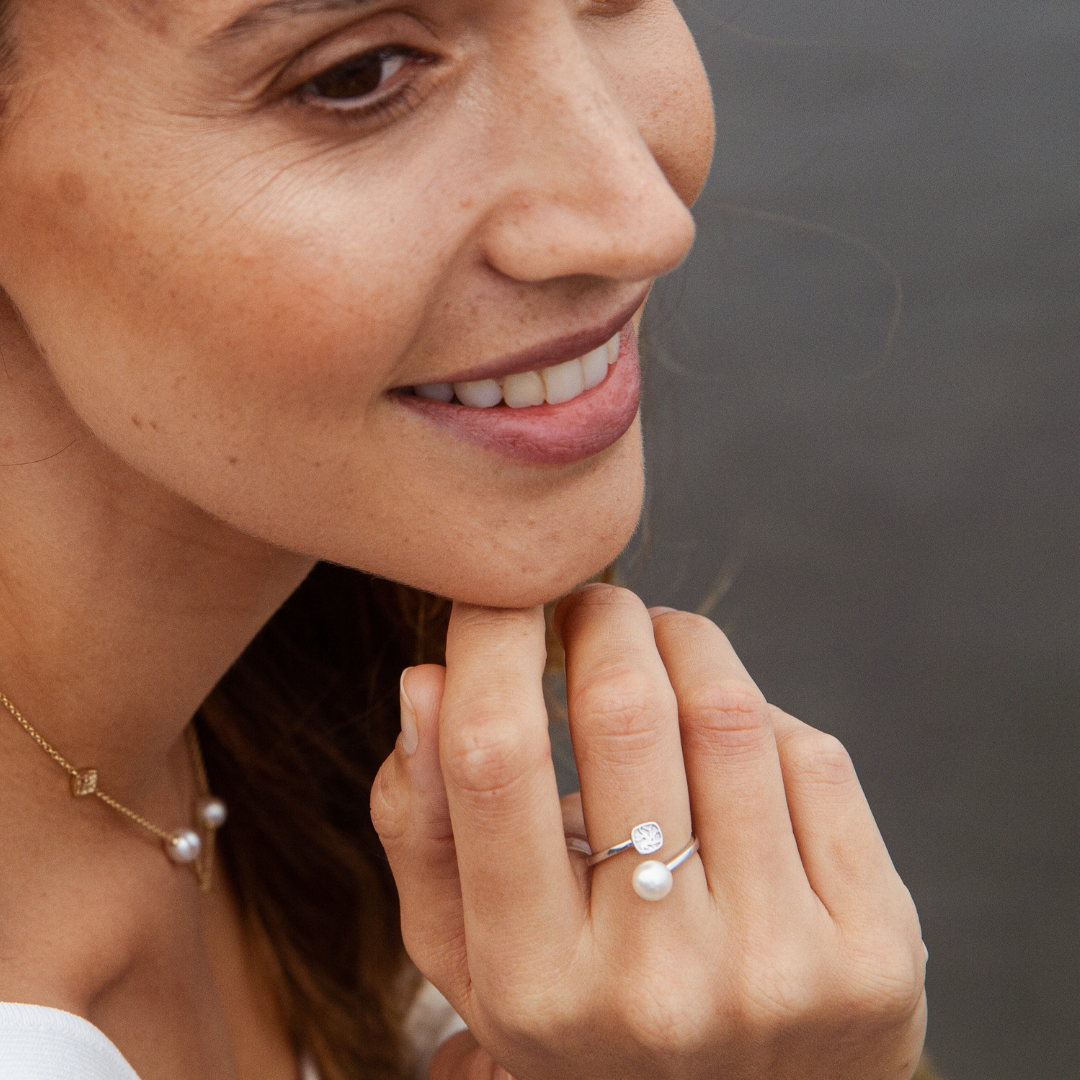
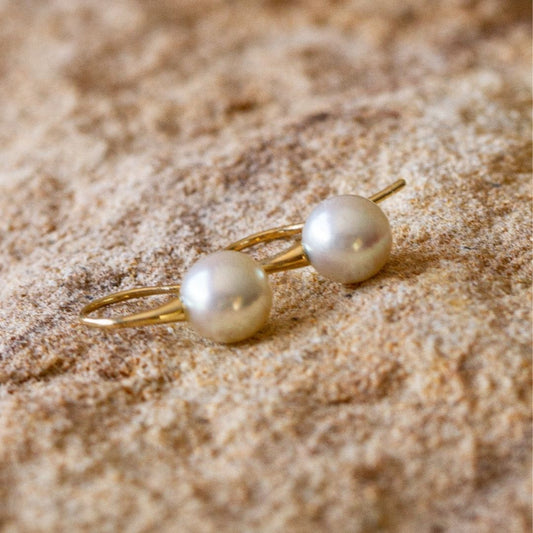
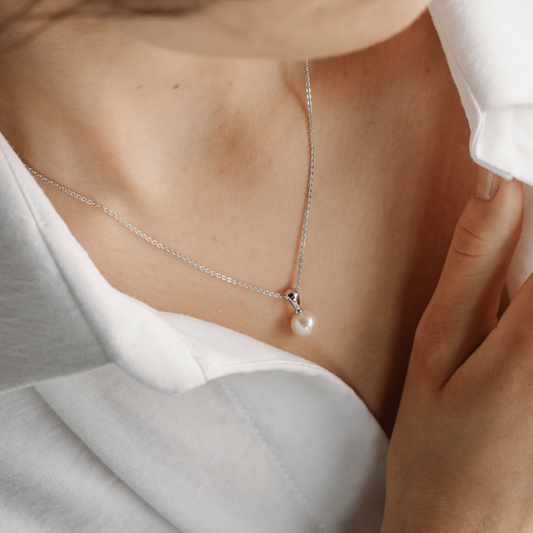
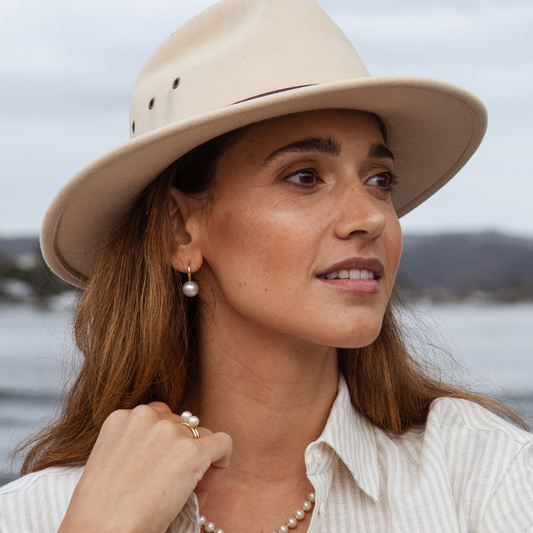
我们的阿古屋珍珠Pinctada fucata 产自我们位于悉尼北部霍克斯伯里河河口的 Broken Bay 珍珠养殖场。该系列包括优雅的珍珠耳环、戒指、项链等。这些珍珠光泽度高,是打造更加鲜艳美丽的外观的完美选择。
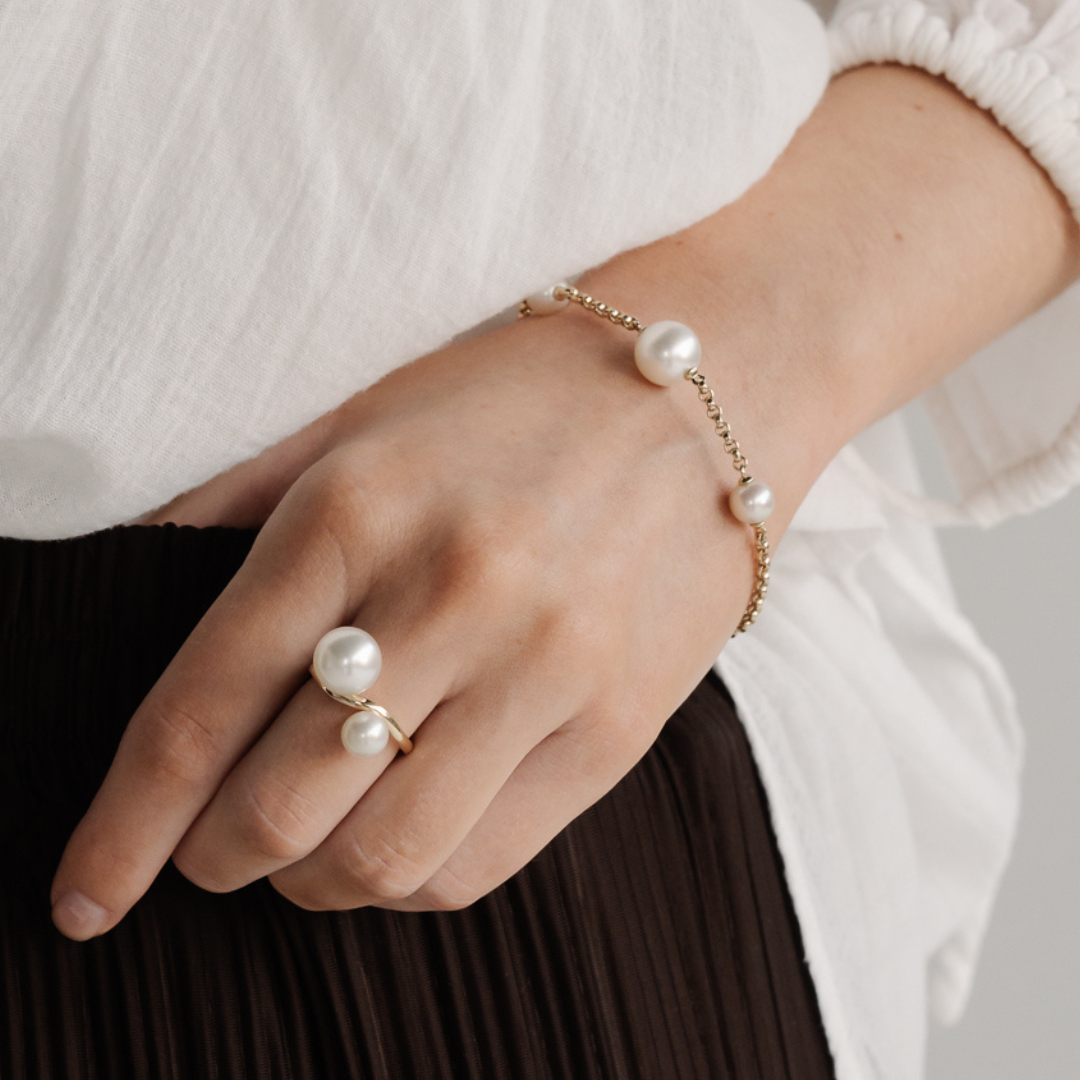
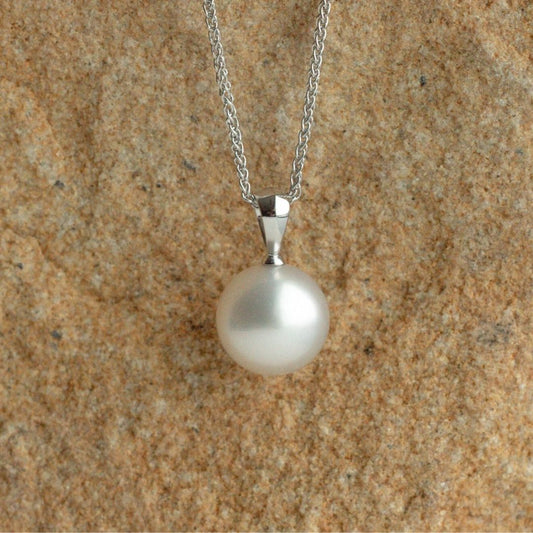
我们的澳大利亚南海珍珠产自布鲁姆以北的 Cygnet Bay 珍珠养殖场。这些珍珠是在大珠母贝中养殖的。该系列珍珠呈最纯净的白色,包括戒指、手镯和吊坠项链等优雅的珠宝饰品。
探索 Pearls of Australia 的澳大利亚海水珍珠首饰的与众不同之处,这里的工艺与澳大利亚本地珍珠的道德采购相结合。发现我们在高级珠宝世界中脱颖而出的独特之处。
在购买我们的珍珠首饰之前,您是否想与我们的珠宝和珍珠专家交谈?他们很乐意为您提供任何帮助,请发送电子邮件至hello@pearlsofaustralia.com.au或致电 (08) 6478 6886 联系他们。
The main differences between Akoya and South Sea pearls are species, size, origin, lustre, style, rarity, and environment.
Akoya pearls are saltwater pearls known for their sharp lustre, produced in sub-tropical environments in the Pinctada fucata pearl shell. Our Akoya pearls are cultivated in New South Wales at our Broken Bay Pearl Farm and are typically smaller than South Sea pearls.
South Sea pearls are also saltwater pearls known for their neutral colours, produced in tropical environments within the Pinctada maxima pearl shell. Our South Sea pearls are cultivated in Western Australia at our Cygnet Bay Pearl Farm and are typically larger than our Akoya pearls.
At Pearls of Australia we always include the origin of our pearls with a Certificate of Authenticity stating the pearl's farm, shape, grade, and details.
In Australia, authentic Akoya and South Sea pearl jewellery is best purchased from specialist pearl brands that work closely with pearl farms.
Pearls of Australia only sells pearls that we grow at our own pearl farms, offering certified South Sea and Akoya pearl jewellery online, with grading and provenance information detailed.
When buying online, choose pearl specialists who clearly state pearl type, origin, and grading information rather than general jewellery marketplaces or retailers.
Yes, South Sea pearls are generally more expensive than Akoya pearls in the Australian market. South Sea pearls are rarer, take longer to cultivate and grow larger.
Akoya pearls are smaller, but still take a lengthy time to cultivate and like South Sea pearls, only produce one pearl at a time.
Both these pearls are among the most valuable cultured pearls.
Akoya pearls typically range from 5mm to 9mm, with larger sizes in the 8mm to 9mm range considered rare and premium.
South Sea pearls usually range from 8mm to 16mm and above, making them the largest commonly cultivated pearls used in fine jewellery.
The size difference is one of the biggest visual distinctions between Akoya and South Sea pearl jewellery.
Akoya pearls are known for their bright, mirror-like lustre. South Sea pearls display a deeper glow, created by their thick layers of nacre.
Neither is better, they are simply slightly different.
You can buy certified Akoya pearls in Australia through pearl specialists and retailers directly connected to pearl farms, such as Pearls of Australia.
Our Australian Akoya pearls are grown at our Broken Bay Pearl Farm in NSW, the only operating pearl farm in New South Wales. We offer our Akoya pearl jewellery online with Australian-wide delivery, or you can visit one of our locations across Australia.
When searching locally, we recommend looking for jewellers who can provide grading and certification details.
Both Akoya and South Sea pearls are durable but need proper care.
South Sea pearls typically have thicker nacre, which contributes to long-term resilience.
High-quality Akoya pearls, like those grown at our Broken Bay Pearl Farm, are also durable and suited to regular wear.
Proper storage and cleaning are more important than pearl type alone.
Akoya pearls are special for their classic round shape, high lustre, and timeless appeal. They are the traditional pearl used in iconic pearl strands and stud earrings, particularly popular in bridal jewellery.
Their bright, reflective finish and balanced proportions make them a favourite for everyday pearl jewellery.
South Sea pearls are typically identified by their larger size, stunning lustre, and neutral colour tones like white, silver or golden.
Most are 8mm or larger in size, and verified South Sea pearls are sold with full disclosure in the form of a Certificate of Authenticity. The most reliable way to confirm a South Sea pearl is to buy from a pearl specialist like Pearls of Australia, where origin and pearl type are clearly stated.
High-quality pearls are judged by:
Pearls of Australia grades pearls using professional standards so customers can compare quality with confidence.
Neither is universally "better", it depends on what you prefer.
Akoya pearls are ideal for classic styles, bright lustre and everyday elegance. South Sea pearls are preferred for their size, and statement jewellery.
Both are saltwater pearls and both are premium choices when ethically sourced and graded professionally. The best pearl is the one that suits your style and budget.
订阅我们的新闻通讯,了解最新的行业趋势、特别促销和重要更新。