Gemstone Bracelets: The Complete Guide to Styles, Meanings & Care
From the ocean's lustrous pearls to the earth's vibrant gemstones, nature provides us with treasures that tell stories. While Pearls of Australia is known for our world-class Saltwater pearls cultivated in the pristine waters of Western Australia and New South Wales, our gemstone collection celebrates the full spectrum of earth's beauty. Each piece, whether featuring the iridescent glow of an Australian South Sea or Akoya pearl or the rich hues of carnelian and lapis lazuli, represents our commitment to authenticity and quality.
Gemstone bracelets have evolved beyond simple accessories. They're stacked for personal expression, and chosen for their symbolic meanings. Current trends reflect our desire to wear jewellery that resonates with who we are and what we value.
Our comprehensive guide explores everything you need to know about gemstone bracelets: From understanding their meanings and identifying genuine pieces to caring for your collection and discovering the latest trends.
Whether you're drawn to the protective energy of onyx, the calming influence of aquamarine, or the timeless elegance of pearls, you'll find the knowledge to choose pieces that truly speak to you.
At Pearls of Australia, we bring the same meticulous standards we apply to pearl cultivation to our gemstone curation, ensuring every piece meets our high benchmarks for quality.
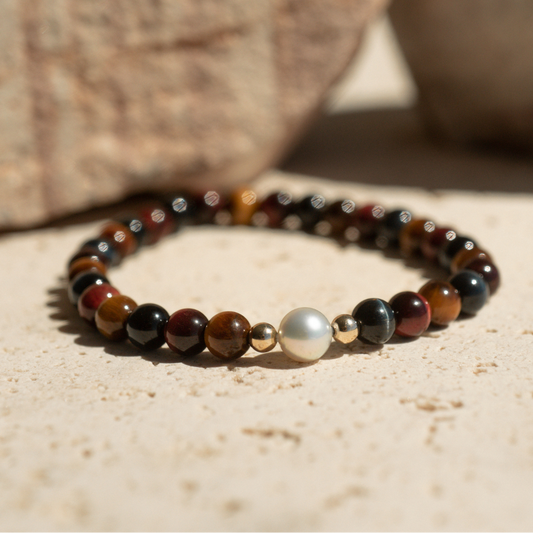
James wears an Onyx Pearl Bracelet and Tiger's Eye Pearl Bracelet stacked.
Shae wears a Malachite Pearl bracelet.
Gemstones are naturally occurring minerals valued for their beauty and durability. They form deep within the earth over millions of years through geological processes involving heat, pressure, and mineral-rich solutions. When cut and polished, these minerals reveal stunning colours, patterns, and optical properties that have captivated humans for millennia.
However, not all gemstones are minerals. This is an important distinction that many people don't realize. Gemstones fall into two categories:
Mineral gemstones include stones like sapphire, emerald, amethyst, and lapis lazuli. These form through crystallization of minerals in the earth's crust or mantle. Their chemical composition determines their colour, hardness, and other physical properties.
Organic gemstones, on the other hand, are created by living organisms. This category includes pearls, coral, amber, and jet. Pearls, for instance, form inside pearl shell when an irritant enters the shell, prompting the creature to coat it with layer upon layer of nacre, a lustrous substance composed of aragonite and conchiolin.
At Pearls of Australia, our specialty lies in organic gemstones, specifically Australian South Sea pearls and Akoya pearls, cultivated in Australian waters. These pearls form naturally within the Pinctada maxima and Pinctada fucata shells at our farms in Cygnet Bay (WA) and Broken Bay (NSW). Each Saltwater pearl takes between two and four years to form, making them approximately 1000 times rarer than diamonds.
Understanding this distinction helps appreciate why pearls command such reverence in the gemstone world. While mineral gemstones showcase the earth's power to transform elements under extreme conditions, organic gemstones like pearls demonstrate nature's ability to create beauty through living processes. Both deserve admiration, and both have their place in fine jewellery.
Gemstone bracelets are jewellery pieces featuring one or more gemstones set in or strung along a band designed to be worn on the wrist. These bracelets come in countless styles, from delicate chains with a single stone to bold beaded designs featuring multiple gemstone varieties. The versatility of gemstone bracelets makes them suitable for every occasion, from everyday wear to special celebrations.
The two main categories of gemstone bracelets are crystal bracelets and semi-precious bracelets.
Crystal bracelets typically feature beaded gemstones strung together, often chosen for their healing properties or metaphysical significance. These might include stones like rose quartz, amethyst, or black tourmaline, and they're particularly popular among those who practice intention-setting.
Semi-precious bracelets encompass a broader range of designs and gemstones. Historically, gemstones were divided into "precious" (diamond, ruby, sapphire, emerald) and "semi-precious" (all others), though this terminology is somewhat outdated. Many so-called semi-precious stones, like opal, aquamarine, and tanzanite, can be just as valuable and beautiful as their precious counterparts.
When it comes to settings, the choice between silver and gold significantly impacts the bracelet's aesthetic and price point.
Sterling silver offers a cool, contemporary look that complements stones with blue, green, or purple tones, such as lapis lazuli, turquoise, and amethyst. Silver is also more affordable, making it an excellent choice for those building a gemstone collection or experimenting with stacking.
Gold settings, whether yellow, white, or rose gold, provide warmth and luxury. Gold is ideal for stones with warm undertones like carnelian, tiger's eye, and citrine. At Pearls of Australia, our gemstone bracelets are crafted in 9ct, 14ct, and 18ct gold, as well as gold vermeil (sterling silver plated with gold), offering options for every preference and budget.
The question "Do gemstone bracelets really work?" often arises, particularly regarding healing properties. While scientific evidence for metaphysical claims is limited, many wearers report subjective benefits from wearing certain gemstones.
Whether these effects stem from the placebo effect, mindfulness practices, or genuine energetic properties, the personal meaning and intention behind wearing gemstone bracelets can enhance well-being. What matters most is choosing stones that resonate with you personally, whether for their beauty, symbolism, or the positive associations they bring.
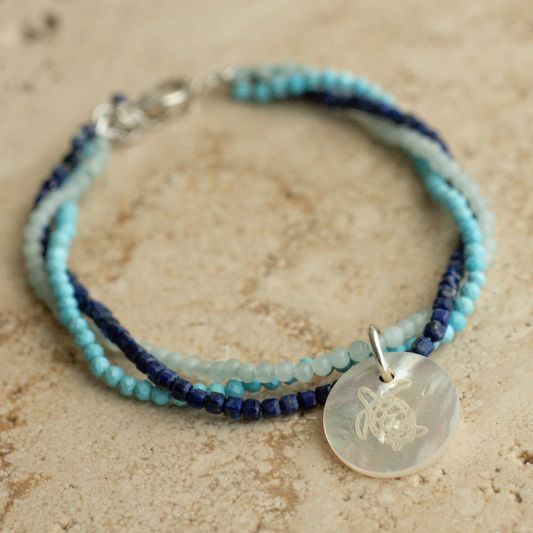
Our Take 3 for the Sea Multi-gemstone Bracelet
Throughout history, gemstones have been attributed with meanings, powers, and healing properties. Whether you view these associations as spiritual truths, cultural traditions, or meaningful symbolism, understanding gemstone meanings can deepen your connection to the jewellery you wear.
Each stone carries its own story, and choosing gemstones that align with your intentions or values can make your bracelet far more than just an accessory.
Whether from ocean or earth, every pearl and gemstone we source tells a story of natural beauty. Our collection embodies a commitment to genuine materials and exceptional quality.
The beauty of gemstone bracelets lies in their versatility. Whether you prefer understated elegance or bold statements, there's a style to match your personality and occasion. In 2026, the trend toward personalisation and stacking has opened up endless possibilities for creative expression.
One of the most sophisticated trends in gemstone jewellery is combining pearls with mineral gemstones. At Pearls of Australia, we've crafted pieces that celebrate both the ocean's and the earth's treasures in a single design.
Stack a carnelian bracelet with a classic pearl strand for a warm, elegant contrast. The creamy glow of Australian South Sea or Akoya pearls provides a neutral base that anchors gemstone stacks beautifully, allowing the colours to shine without overwhelming the look. Pearls bring timeless sophistication to any combination, whether you're layering them with vibrant turquoise, deep lapis lazuli, or earthy tiger's eye.
Baroque pearls, with their organic shapes, mix particularly well with gemstone beads for textural contrast. The irregular forms of baroque pearls add visual interest and a contemporary edge to traditional gemstone designs.
For men's jewellery, consider pairing Australian Saltwater pearls with onyx or tiger's eye. This combination creates masculine, refined pieces with subtle sophistication. The lustre of our Australian-grown pearls complements the earthy tones of tiger's eye or the sleek minimalism of black onyx.
Women's gemstone bracelets span an incredible range of styles, from delicate tennis bracelets to chunky beaded designs. The trend toward maximalist stacking means many women are wearing three, five, or even more bracelets at once, mixing gemstone types, textures, and metals.
Multi-gemstone pieces feature colour gradients, playful combinations, and unexpected pairings, tourmaline with sapphires, pearls with malachite, or carnelian with lapis lazuli. Our Take 3 for the Sea bracelets are the perfect multi-gemstone design, featuring lapis lazuli, aquamarine and turqouise complemented by a Mother of Pearl shell disc from our Cygnet Bay Pearl farm in WA.
The men's gemstone jewellery market is the fastest-growing segment, and this growth reflects changing attitudes toward men's accessories and a desire for meaningful, personal jewellery.
Men's gemstone bracelets typically feature chunky beads (8mm to 10mm), matte finishes, and minimal designs. Popular materials include gunmetal, stainless steel, and brushed gold. Stones like tiger's eye, onyx, black tourmaline, and hematite are particularly favoured for their earthy, masculine aesthetics.
Unisex or gender-neutral styles are increasingly popular, with more than half of consumers preferring jewellery that transcends traditional gender categories. Simple beaded bracelets in natural stones work for anyone, as do neoprene accented with a single statement gemstone.
Sam wears an Onyx Pearl Bracelet stacked with a Ceramic Pearl Bracelet.
Danica wears a Ceramic Pearl Bracelet.
Birthstone bracelets make thoughtful, meaningful gifts for birthdays, Mother's Day, anniversaries, or family celebrations.
Many people create stacked bracelets representing family members' birthstones, building a wearable tribute to loved ones. Charm bracelets with birthstone additions allow for ongoing personalisation as families grow.
For Mother's Day, birthstone bracelets featuring the birth months of children or grandchildren are particularly cherished. These pieces become heirlooms, passed down through generations as symbols of family connection.
With the rise in gemstone jewellery popularity, the market has seen an increase in imitation and synthetic stones. While lab-created gemstones have their place and offer ethical, affordable alternatives, it's essential to know what you're purchasing. Genuine natural gemstones, authentic cultured pearls, and transparent labeling are hallmarks of reputable retailers.
Genuine gemstones often show natural inclusions, colour variations, and imperfections that indicate authenticity. While high-quality gems are cleaner, most natural stones have some internal characteristics visible under magnification.
Colour Uniformity: Synthetic or dyed stones often display overly perfect, uniform colour. Natural gemstones typically show slight colour variation.
Surface Texture: Real gemstones feel cool to the touch and retain that coolness longer than glass or plastic imitations. The surface should feel smooth but not slippery like plastic.
Inclusions: Natural gemstones usually contain inclusions, internal features like mineral crystals or fractures. These are often called "jardin" in emeralds or "silk" in sapphires. Perfectly clear stones might be synthetic or lab-created.
Chatoyancy and Optical Effects: Stones like tiger's eye should display moving bands of light (chatoyancy) when rotated. Star sapphires and star rubies should show a distinct star pattern under direct light. These effects are harder to replicate in imitations.
Pearls, being organic gemstones, have unique authentication methods:
The Tooth Test: Gently rub the pearl against the edge of your front teeth. Real pearls feel slightly gritty due to their layered nacre structure, while fake pearls feel smooth.
Lustre Examination: Genuine pearls display a deep, complex lustre with nuanced reflections. Imitation pearls often have a flat, uniform shine without depth.
Surface Irregularities: Natural and cultured pearls rarely have perfectly smooth surfaces. Small blemishes, ridges, or variations are normal. Fake pearls tend to look suspiciously perfect.
Weight: Real pearls have noticeable weight for their size. Lightweight "pearls" are likely plastic or hollow glass.
Temperature: Pearls feel cool to the touch initially, warming gradually against skin. Plastic beads warm quickly.
At Pearls of Australia, every pearl is harvested from our own pearl farms and undergoes rigorous quality assessment. We provide certificates of authenticity for our pieces, documenting the pearl's origin, size, grade, and quality characteristics.
Purchasing from established Australian retailers offers several advantages:
Consumer Protection: Australian retailers must comply with consumer protection laws, ensuring fair trading practices and recourse if issues arise.
Quality Standards: Reputable retailers maintain consistent quality standards and inspect inventory before offering it for sale.
Authenticity Guarantees: Established jewellers stake their reputation on selling genuine products and provide documentation to support authenticity claims.
Expert Knowledge: Staff at specialist retailers can answer questions, explain gemstone properties, and help you select pieces that meet your needs.
Ethical Sourcing: Many Australian retailers prioritize ethical sourcing, ensuring gemstones and pearls are obtained responsibly without exploitation or environmental harm.
The same principles apply whether you're buying pearls or gemstones: Weight, temperature, expert certification, and retailer reputation all matter. At Pearls of Australia, we bring decades of expertise in Australian pearl cultivation to our gemstone curation, applying the same meticulous standards across all our pieces.
James wears an Onyx Pearl Bracelet stacked with a Tiger's Eye Pearl Bracelet. Sarah wears a Keshi Pearl Strand Bracelet.
Proper care ensures your gemstone bracelets remain beautiful for years, potentially becoming heirlooms passed down through generations. Different gemstones require different care approaches based on their hardness, porosity, and chemical composition. Understanding these differences helps protect your investment and preserve the stones' natural beauty.
Pearls are softer than most gemstones (2.5-4.5 on the Mohs scale) and require gentle, attentive care. The same care principles apply to pearls as to soft gemstones like turquoise and malachite:
Last On, First Off Rule: Put pearl jewellery on after applying makeup, perfume, hairspray, and lotions. Remove pearl jewellery first when undressing. Chemicals in cosmetics and fragrances can damage pearls' delicate nacre.
Wipe After Wearing: Gently wipe pearls with a soft, damp cloth after each wear to remove oils, perspiration, and residue.
No Harsh Chemicals: Avoid exposing pearls to household cleaners, chlorine, ammonia, or acidic substances (including lemon juice and vinegar).
Gentle Cleaning: Clean pearls with lukewarm water and a soft cloth. Do not use jewelry cleaners, ultrasonic cleaners, or steam cleaners on pearls.
Proper Storage: Store pearls separately from harder gemstones in a soft pouch or lined jewelry box. Avoid airtight containers—pearls contain water and need to "breathe."
Regular Wear: Pearls benefit from being worn. The natural oils from your skin help maintain their lustre and prevent them from drying out.
For more detailed guidance on pearl care, visit our Product Care page.
Mel wears a Malachite Pearl Bracelet.
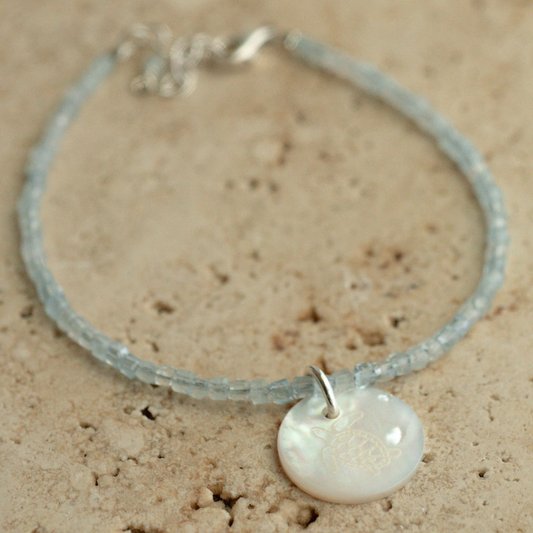
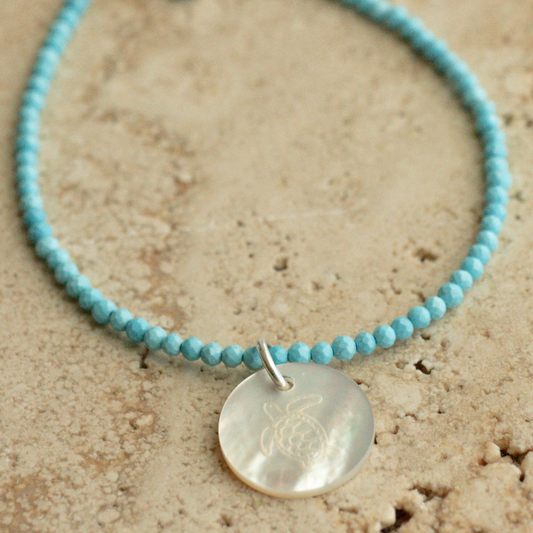
Our Turquoise and Mother of Pearl Charm Bracelet part of the Take 3 for the Sea range.
Choosing where to purchase gemstone jewellery is as important as selecting the piece itself. The retailer's expertise, ethical standards, and commitment to quality significantly impact your satisfaction and the long-term value of your purchase.
With the rise of online shopping, finding authentic, high-quality gemstone bracelets has never been more accessible, or more challenging. The convenience of browsing extensive collections from home comes with the responsibility of ensuring you're buying from trustworthy sources.
Specialist Retailers: Look for retailers who specialize in gemstone or pearl jewellery rather than general accessory shops. Specialists have deeper knowledge, better sourcing relationships, and higher quality standards.
Farm-Direct or Manufacturer-Direct Brands: Brands that farm their own pearls or have direct relationships with gemstone sources often offer better value and guaranteed authenticity. Pearls of Australia falls into this category, with our own pearl farms in Western Australia and New South Wales.
Established Australian Brands: Retailers with physical locations and long-standing reputations have more to lose from selling inauthentic products. Check for Australian Business Numbers (ABN), customer reviews, and transparent contact information.
Certification and Documentation: Reputable online retailers provide detailed product descriptions, including gemstone type, treatments, origin, and grading. They should offer certificates of authenticity for valuable pieces.
Consumer Protection Laws: Australian retailers must comply with Australian Consumer Law, which provides strong protections regarding product quality, refunds, and misleading representations.
Local Customer Service: Australian-based customer service teams understand local expectations and can address concerns promptly during business hours in your time zone.
Faster Shipping: Domestic shipping is faster and more reliable than international orders, with easier tracking and fewer customs complications.
Quality Standards: Many Australian retailers maintain higher quality standards than international marketplace sellers, carefully curating inventory rather than offering mass-produced items.
Ethical Sourcing: Australian brands are increasingly committed to ethical sourcing practices, sustainability, and transparency about supply chains.
Supporting Local Economy: Purchasing from Australian businesses supports local jobs and the domestic economy.
Steven wears a Neoprene Pearl Bracelet stacked with a Neoprene Seagrass Bracelet.
Georgia wears an Akoya and South Sea Pearl Strand Bracelet.
With decades of experience in Australian pearl cultivation, our gemstone curation follows the same standards of authenticity and quality that define our pearl farming. Our Australian heritage runs deep. Three generations of the Brown family have dedicated themselves to sustainable pearling, beginning with Dean Brown in 1946.
We maintain vertical integration from farm to finished jewellery, meaning we control every step of the process for our pearls. For gemstones, we work with carefully vetted suppliers who share our commitment to ethical sourcing and quality. Every piece we offer meets our exacting standards, whether it features a South Sea pearl from our Cygnet Bay Pearl Farm, Akoya pearl from Broken Bay Pearl Farm, or a vibrant gemstone selected for its beauty and authenticity.
When you purchase from Pearls of Australia, you're not just buying jewellery, you're investing in craftsmanship, heritage, and the natural artistry of Australian waters and earth.
Gemstone bracelets represent far more than beautiful accessories. They connect us to earth's ancient processes and the ocean's patient creation, tell stories of personal meaning and intention, and offer endless opportunities for creative expression through colour and symbolism.
From the luminous glow of Australian Saltwater pearls to the vibrant hues of carnelian, lapis lazuli, and aquamarine, each gemstone carries its own character, history, and significance. Understanding gemstone meanings, identifying genuine pieces, and caring for your collection ensures your bracelets remain treasured for years, potentially becoming heirlooms passed through generations.
Whether you're drawn to healing crystals, contemporary stacking trends, timeless tennis bracelets, or the quiet luxury of understated pearls, there's never been a better time to explore gemstone bracelets as expressions of personal style and values.
At Pearls of Australia, we honor the artistry of both ocean and earth. From the pearls we cultivate in the pristine waters of our Cygnet Bay and Broken Bay pearl farms to the gemstones we carefully curate for beauty and authenticity, every piece reflects our commitment to quality, craftsmanship, and respect for nature's treasures.
We invite you to explore our complete collection of pearl and gemstone bracelets, discovering pieces that resonate with your unique story and style.
Prefer to talk to one of our Jewellery and Pearl experts before purchasing one of our pieces? For questions about our gemstone and pearl collections, or assistance selecting the perfect piece, please contact our team at hello@pearlsofaustralia.com.au or call (08) 6478 6886.
Many gemstones are associated with good luck across different cultures.
For career success, several gemstones are traditionally recommended.
Absolutely! Pearls and gemstone bracelets pair beautifully together when thoughtfully combined.
Pearls serve as elegant neutral anchors that complement virtually any gemstone colour. For harmonious stacking, consider colour coordination—white pearls work with cool-toned stones like lapis lazuli, aquamarine, or turquoise, while cream or golden pearls pair wonderfully with warm stones like carnelian, citrine, or tiger's eye.
For textural interest, mix smooth round pearls with faceted gemstones or baroque pearls with polished gemstone beads.
Keep metal finishes consistent (all gold or all silver) for a cohesive look, or intentionally mix metals for a contemporary, eclectic aesthetic.
Yes, pearls are considered gemstones, specifically organic gemstones. While most gemstones are minerals formed through geological processes (like sapphire, emerald, or amethyst), organic gemstones are produced by living organisms. This category includes pearls (formed by pearl shell), amber (fossilized tree resin), coral (from marine organisms), and jet (fossilized wood).
Pearls form when an irritant enters a pearl shell, prompting the creature to coat it with layers of nacre, a lustrous substance composed of aragonite and conchiolin. This process makes pearls distinct from mineral gemstones but no less valuable or beautiful. In fact, natural pearls are among the rarest gemstones, more scarce than many diamonds.
Many gemstones complement pearls beautifully:
Consider both colour and meaning when pairing. For example, combine lapis lazuli (truth and wisdom) with pearls (purity and calm) for enhanced intention, or pair carnelian (motivation) with pearls (balance) for energized yet grounded energy.
The effectiveness of gemstone bracelets for healing is a matter of personal belief and experience. Scientific evidence supporting metaphysical claims is limited, and gemstones should never replace professional medical treatment for health conditions.
However, many people report subjective benefits from wearing gemstone bracelets, which may stem from several factors:
Whether gemstone properties are energetic, psychological, or symbolic, the practice of choosing stones aligned with personal intentions can support well-being.
The key is approaching gemstone bracelets as complementary tools for mindfulness and self-expression rather than guaranteed cures for specific ailments.
Identifying genuine gemstone bracelets involves several techniques:
For pearls specifically, you can use the tooth test with caution (real pearls feel gritty when rubbed against teeth), lustre examination (genuine pearls have deep, layered lustre), and surface inspection (natural pearls rarely have perfectly smooth surfaces).
The title of rarest gem is contested among several candidates. Painite, first discovered in Myanmar in the 1950s, was once considered the world's rarest mineral, with only two known specimens for decades. While more painite has been found, gem-quality pieces remain exceptionally rare.
Other contenders include red beryl (bixbite), found only in Utah and New Mexico and rarer than diamond; taaffeite, a rare beryllium magnesium aluminum oxide often mistaken for spinel; and grandidierite from Madagascar, with facet-grade material being extremely scarce.
Natural pearls of exceptional quality, large, round, with flawless lustre and only available on the antique market, also rank among the rarest gems. Historic pearls like La Peregrina and La Régente have sold for millions due to their extraordinary rarity and provenance.
Birthstone rarity depends on specific variety and quality. Some of the rarest include:
June arguably has the rarest birthstone if we consider natural pearls, which are among the scarcest gems on earth. While cultured pearls are more accessible but still rare, natural pearls of gem quality, particularly those that are large, round, and flawless, are extraordinarily rare.
June also claims alexandrite as an alternative birthstone, and this colour-changing chrysoberyl is also rare, especially in larger sizes with strong colour change.
October is another strong candidate, with black opal and Paraiba tourmaline both being exceptionally rare and valuable.
Black opal from Lightning Ridge shows intense play-of-colour against a dark body tone, making fine examples highly sought after.
Paraiba tourmaline, with its vivid neon blue-green colour, is one of the rarest gemstones discovered in recent decades.
Australia's rarest gemstones include:
Pink Diamonds from Argyle Mine: Particularly "Fancy Vivid" and "Fancy Intense" grades in purplish-pink shades. These diamonds are exponentially rarer than white diamonds. Though the Argyle mine closed in 2020, existing Australian pink diamonds continue to increase in value.
Black Opal from Lightning Ridge: Genuine black opal with intense play-of-colour against a dark body tone is exceptionally rare. Fine specimens command extraordinary prices.
Padparadscha Sapphire: While not exclusive to Australia, the padparadscha sapphires found in Queensland, displaying the coveted peachy-pink colour, are among the rarest sapphire colour varieties.
Queenslandite: An extremely rare purple gemstone found only in Queensland, technically a metamorphosed rock rather than a pure mineral.
Proper gemstone bracelet care depends on the specific stones:
Softer Stones (Pearls, Turquoise, Malachite, Lapis Lazuli): Clean with a soft, damp cloth only. Avoid soap, chemicals, and ultrasonic cleaners. Store separately from harder stones to prevent scratching. For pearls, follow the "last on, first off" rule—put them on after cosmetics and remove them first.
Medium Hardness (Amethyst, Citrine, Moonstone, Rhodonite): Clean with lukewarm soapy water and a soft cloth or brush. Rinse thoroughly and dry. Avoid harsh chemicals and sudden temperature changes.
Hard Stones (Sapphire, Ruby, Diamond, Aquamarine): Can be cleaned with warm soapy water. Generally safe for ultrasonic cleaning if no fractures or inclusions are present. Still avoid harsh chemicals.
Historically, only four gemstones were classified as "precious": diamond, ruby, sapphire, and emerald, with all others deemed "semi-precious." However, this distinction is now considered outdated. Modern gemology recognizes that value depends on specific quality factors rather than historical categories.
A commonly referenced list of highly valued gemstones includes:
This list represents gemstones that command high prices and are particularly sought after, but it's not definitive. Many other gemstones can be equally or more valuable depending on quality, size, and rarity.
The best places to buy gemstone bracelets online in Australia include:
When shopping online, look for:
At Pearls of Australia, we combine decades of pearl farming expertise with careful gemstone curation, offering pieces that meet the same standards of quality, authenticity, and ethical sourcing that define our pearl collections.
Current trending styles in Australian gemstone bracelet markets include:
Australian markets particularly favor beach-inspired aesthetics (aquamarine, turquoise, pearls), native gemstone pride (Australian opals and sapphires), and casual luxury that transitions from beach to evening.
订阅我们的新闻通讯,了解最新的行业趋势、特别促销和重要更新。