The History of Pearls: A Journey Through Time
$0.00 AUD
Long before diamonds were cut or gemstones were mined, pearls were revered as the ocean’s most mysterious treasure. The history of pearls stretches back thousands of years, woven through ancient mythology, global trade, royal adornment, and modern innovation.
Naturally formed beneath the surface of the sea, pearls are the only gemstone cultivated within a living organism, making their story extraordinary.
The earliest records suggest that pearls were discovered by coastal communities searching for food. As they opened oysters to eat, they occasionally found lustrous spheres, rare, beautiful and unlike anything else in nature. These early discoveries sparked fascination across ancient civilisations and quickly elevated pearls from accidental finds to highly prized treasures.
This moment marks the beginnings of both the history of pearl diving and the global obsession with these ocean-born gemstones.
Pearling is the process of recovering pearls from oysters or molluscs in either seawater or freshwater.
Until the 20th century, the only way of recovering and collecting pearls was by diving. The first documented instance of pearl diving has been dated back to 2,000 BCE in China, where pearl divers around the world risked their lives, diving to depths of 100ft to retrieve pearl shells in the hopes of finding these precious gems.
Today, almost any pearl on the market is a cultured pearl. Natural pearls are exceptionally rare, and most natural beds of pearl-producing shells have been exhausted due to over-harvesting in the past.
A pearl is formed as a protection response: When an irritant finds itself inside an oyster or mollusc shell. In the case of natural pearls, this irritant could be a bone, a grain of sand, or a piece of dust, and when it enters the shell, it triggers the defence mechanism of the shell. The defence mechanism of the shell and the way in which it protects itself from this foreign entity is to secrete layers of a substance called nacre. This layering of nacre coats the foreign entity that has accidentally entered the shell and this process slowly creates a pearl over the span of several years.
Although cultured pearls are real, natural pearls are also produced by an oyster or mollusc shell, the only difference is that they require human assistance to grow. Pearl cultivation involves the process of a pearl farmer physically inserting an irritant in the form of a tiny bead called a nucleus. This is inserted in the soft tissue of the shell and in here layers of nacre are formed – just the same as a natural pearl is formed.
The history of mother of pearl is deeply intertwined with the pearl industry itself. This iridescent inner shell lining has been used for tens of thousands of years, with evidence dating back to the Bardi Jawi people of the Dampier Peninsula. The pearl shell was both an important and nutritious food source and was of great cultural significance. They would carve the mother of pearl shell into a teardrop shape and then carve unique lines into the shell before staining it with red ochre.
On the other side of the world, mother of pearl shell became prominent over 6,000 years ago, with evidence dating back to Ancient Egypt. It later became prominent in Ottoman architecture, religious artefacts and decorative inlay work in decor and furniture.
By the 19th century, mother of pearl became a global commodity through button production. In Broome, vast oyster beds positioned the region as the world’s leading supplier. At one stage, Broome contributed to over 80% of global mother of pearl before World War II.
For centuries, the only way to source pearls was through dangerous pearl divers date back to around 2,000 BCE in China, with others operating across the Persian Gulf, India and Sri Lanka. These divers would descend up to 30 metres on a single breath, risking their lives in search of oysters that might contain a pearl.
This era defined the early history of pearls and directly influenced wealth and trade across multiple regions.
Then:
Now:
Today's methods reflect a refined evolution of the industry, where careful craftsmanship replaces chance.
The shift from natural harvesting to farming marks one of the most important turning points in cultured pearl history.
In the late 19th century, Kokichi Mikimoto revolutionised the industry by developing a reliable method for cultured pearls. By 1899 he successfully brought cultured Akoya pearls to market, forever changing accessibility and supply of Saltwater pearls.
Modern pearl farming has since evolved into a highly skilled practice that balances:
At Australian pearl farms like Cygnet Bay and Broken Bay, pearl cultivation is deeply connected to sustainability and the health of our oceans.
The Japanese son of a noodle store owner, Kokichi Mikimoto, first learned how to consistently culture pearls. Mikimoto was highly instrumental in creating the global cultured pearl industry, where in 1899 he started selling Akoya pearls in Japan through his pearl culturing technique.
In 1960, Pearls of Australia spearheaded Australia’s first trial harvest of cultured pearls, chartering a new course in pearling otherwise not known within Australia or rest of the world, outside of Japan. No cultured pearl farm in the world had ever successfully come to fruition without Japanese involvement. That all changed, thanks to the Brown family and their passionate dedication to a quest that was considered virtually impossible. From bark huts and handmade tools, the story of Australia’s cultured pearling pioneers begun. Lyndon Brown then trained and employed three local Bardi Jawi men. Tom Wiggan, Aubrey Tigan and Gordon Dixon, to also culture pearls, and so the very first all Australian pearl farm was established on Cygnet Bay Pearl Farm, in the Kimberley.
The process of pearl formation does not differ between types of pearls, whether that be Akoya pearls, Tahitian pearls, South Sea pearls, and Freshwater pearls.
An Akoya pearl is a type of saltwater pearl that comes from the Pinctada fucata shell. These pearls are mainly found in the colder waters off the coast of Japan, as well as Vietnam, Korea, and Australia.
Our Akoya pearls are sustainably grown in the azure waters of our Broken Bay Pearl Farm, located on the Central Coast of NSW.
Tahitian Pearls were revered by the Polynesians, and in their culture, they were seen as gifts from their god Oro – the god of love and fertility. The French arrived and colonized in the 1600’s, and during this time became enamoured with these unique pearls. They began harvesting all pearl oysters which nearly led them to extinction until a limit on harvesting was decreed in 1880.
In the 1960’s modern pearl culturing techniques as well as pearl farms were introduced to the islands and today Tahitian pearls make up to 20% of the pearl market.
South Sea pearls are a type of saltwater pearl and are considered the rarest of all types of pearls. They come from the Pinctada maxima shell, where the name “South Sea” originates from the location of the shell, as these shells are found in the southern hemisphere – particularly around northern Australia, Indonesia, the Philippines, Burma and French Polynesia.
Our South Sea pearls are sustainably cultivated in the pristine and remote waters of our Cygnet Bay Pearl Farm, located on the Kimberley Coast, WA.
Freshwater pearls are grown in rivers, lakes, reservoirs, and ponds – most of them coming from China. Freshwater pearls are usually less lustrous, have a thinner nacre, produce multiple pearls at a time and are cultured for a shorter time than their Saltwater pearl counterparts.
In the late 19th and early 20th centuries, Broome became the epicentre of global pearling. This peaked in 1910 where Broome supplied over 80% of the world’s mother of pearl. This then transitioned to cultured pearling in the mid-20th century.
The establishment of Cygnet Bay Pearl Farm in 1946 marked a new era, being the first Australian owned operation to successfully culture South Sea pearls.
Cultures around the world hold their own symbolic meaning to the precious pearl. Greek culture believed that pearls were the tears shed by Aphrodite, the goddess of love. In Hindu culture, Krishna a major Hindu deity, presented his wife with pearls when they were wed.
Furthermore, Arab culture held a similar notion to that of the Greeks, believing that pearls were the result of the tears of gods that had fallen into the ocean and made their way into the shell of oysters. Pearls carried great importance in Arab culture due to the abundance of natural oyster beds in the Persian Gulf which was at the centre of the pearl trade before the advent of cultured pearls.
For over 40,000 years, The Bardi Jawi people of the Dampier Peninsula have harvested pearl shell. Not only was the shell an important and nutritious food source, but it was also incredibly culturally significant.
The Christian bible even describes the gates of heaven as being carved out of pearl. The global cultural significance of the pearl and the pearl shell is huge, has been for millennia – especially in its use in jewellery.
The history of wearing pearls is closely tied to power.
A famous early example includes a pearl necklace discovered in a Persian tomb dating back to 420BC, one of the oldest known pieces of pearl jewellery.
The Pearl Age (15th to 17th Century)
This period marked the height of the history of pearls in fashion, particularly across European royalty. Pearls were set in crowns, necklaces, hairpieces, gowns, and more.
Victorian & Edwardian Eras
Pearls symbolised elegance and femininity, often warn in delicate strands and brooches.
20th Century Revival
Icons like Coco Chanel redefined pearls as everyday luxury, layered and effortlessly chic.
Royal and historic pearl collections have heavily influenced modern jewellery design. From elaborate royal pearl strands to heirloom pieces, these collections inspire:
Today’s designers reinterpret these influences through a contemporary lens, balancing tradition with innovation.
Today, the history of pearls continues to evolve.
Modern pearl farming represents one of the most sustainable forms of luxury:
From ancient discovery to contemporary cultivation, pearls remain a symbol of resilience and a connection to the natural world.
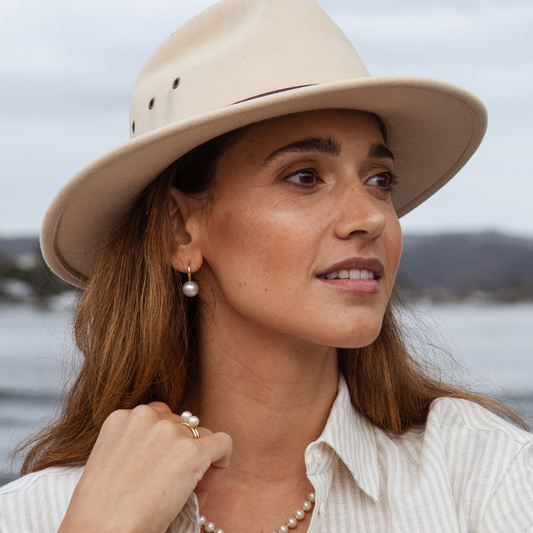
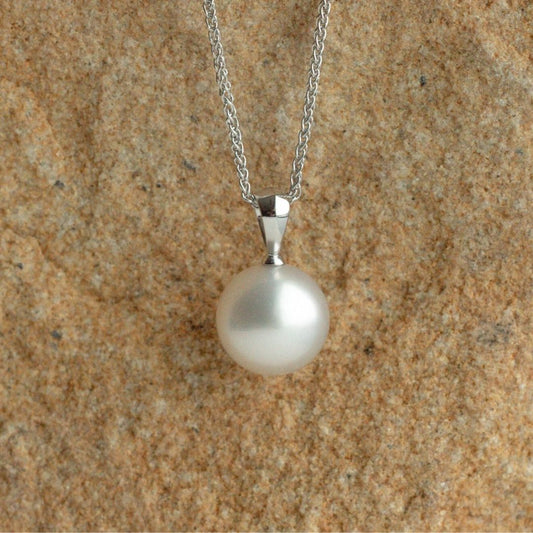
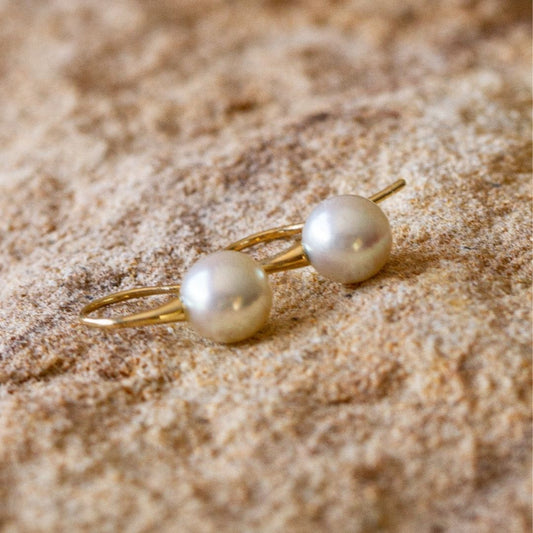
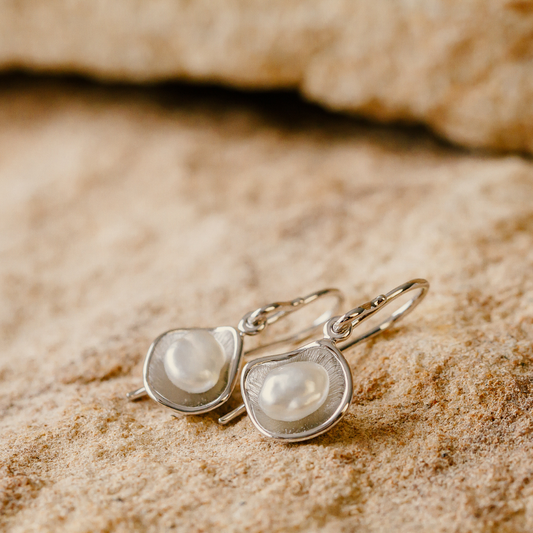
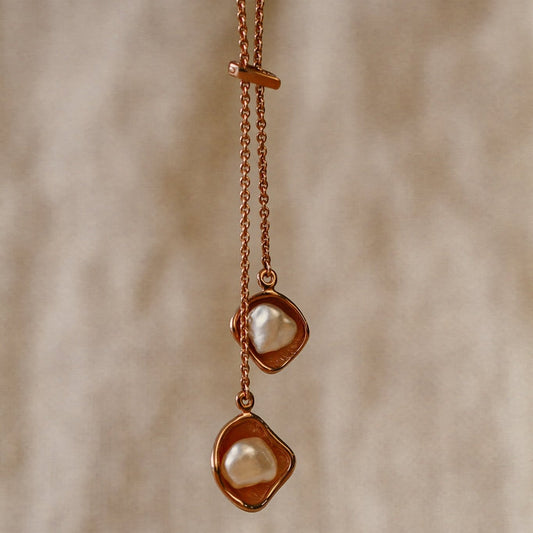
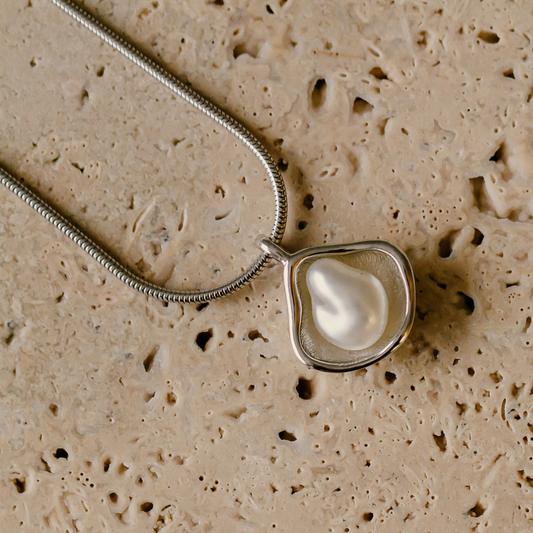
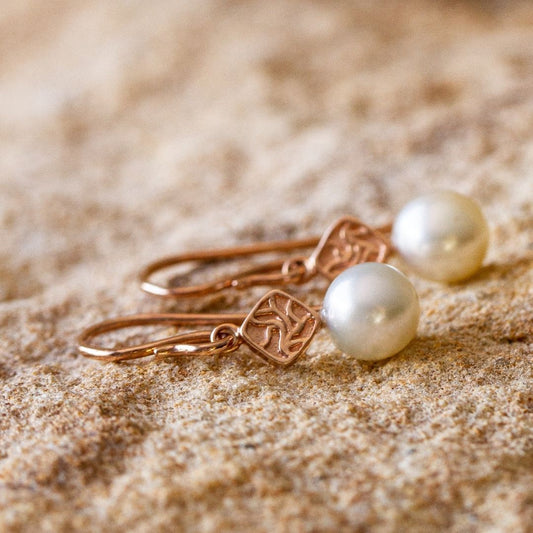
Our collection of classic pearl jewellery is a modern take on timeless, staple pieces suitable for all ages and styles. From simple studs to accent your everyday work outfits, to the perfect day-to-night essential pendant, ring, or strand, that you’ll never want to take off, we have you covered with the understated beauty of Australian South Sea or Akoya pearls.
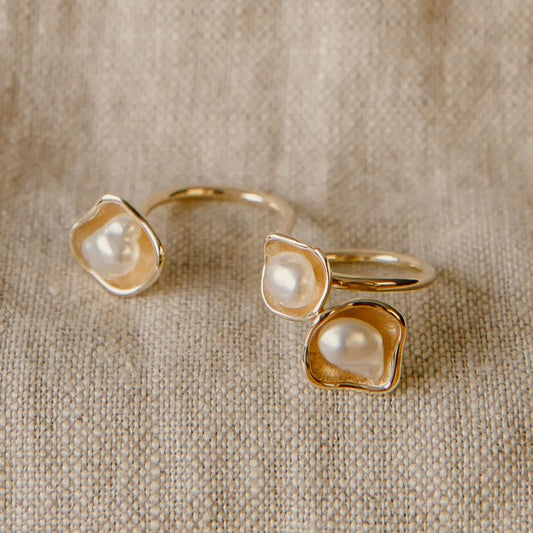
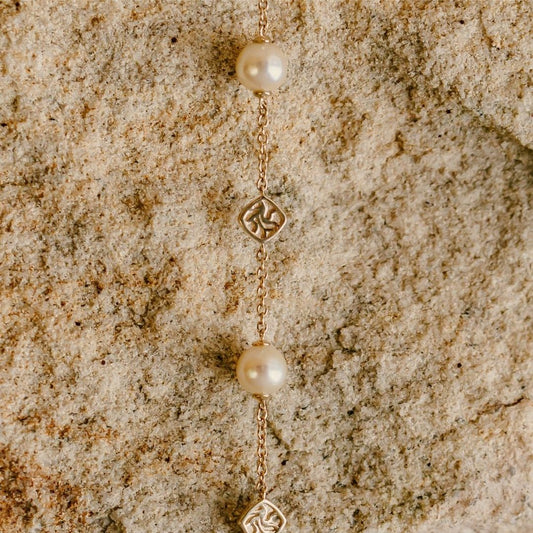
This popular jewellery collection draws its inspiration from the stunning natural lily varieties of the Kimberley region of Northwest Australia, where even today, new species are being identified. Throughout this rugged and remote area over 3,500 varieties have been recorded, leading it to be regarded as one of the world’s biodiversity hotspots for this beautiful flower.
Until recently, the powerful contribution that seagrass makes to the preservation of a pristine marine environment has mostly gone unnoticed. Seagrass meadows form part of ‘blue forests’ (alongside mangroves and saltwater marshes) which are vital for coastal communities and significant for our global climate being amongst the most efficient carbon sinks in the ocean.
Every pearl carries a story shaped over time, by nature and culture.
Explore our collections and discover our Saltwater pearl jewellery.
Prefer to talk to one of our Jewellery and Pearl experts before purchasing one of our pearl pieces? They would love to help you in any way, please contact them either by sending an email to hello@pearlsofaustralia.com.au or call (08) 6478 6886.
The history of pearls dates back over 4,000 years, with early discoveries in regions like China and the Persian Gulf. Initially found by chance while gathering food, pearls quickly became symbols of wealth, power and spirituality across ancient civilisations.
Pearls were likely discovered accidentally by early coastal communities opening oysters for food. Inside, they found naturally formed gems, sparking fascination and leading to the development of pearl diving and trade.
Natural pearls form without human intervention, while cultured pearls are created when a small seed called a nucleus is insertedinto a pearl shell. Both are real pearls, but cultured Saltwater pearls are far more common today due to sustainability and consistency.
The history of pearl diving dates back to at least 2000 BCE. Divers in regions like the Persian Gulf and Asia would free-dive to great depths without equipment, making it a dangerous profession.
Pearl farming has evolved from manual, unpredictable harvesting to highly refined cultivation techniques. Today, saltwater pearl farms aim to use sustainable practices and longer growth cycles to produce high-quality pearls while supporting marine ecosystems.
Pearls remain highly valued due to their natural beauty and cultural significance. Modern pearl farming ensures they are one of the few truly renewable luxury gemstones, making them increasingly relevant in today’s ethical jewellery landscape.
Join our mailing list for regular sales, upcoming releases and insights into the world of positive pearling and ocean conservation